Table of contents
- Why Washing Machines Shake in the First Place
- An Unbalanced Load Is the Most Common Cause
- The Washer May Not Be Sitting Level
- The Floor Under the Washer May Be Part of the Problem
- Shipping Bolts May Still Be Installed
- Overloading the Washer Can Cause Violent Movement
- Washing One Heavy Item Can Throw the Drum Off Balance
- Worn Shock Absorbers or Suspension Parts Can Cause Banging
- Drum Bearings Can Cause Noise, Vibration, and Movement
- Loose Internal Parts Can Create Knocking or Banging Sounds
- Drainage Problems Can Make a Washer Shake During Spin
- How to Troubleshoot a Shaking Washing Machine Yourself
- When You Should Stop Using a Washer That Is Moving or Banging
- How to Prevent Excessive Washer Vibration
- Conclusion
A washing machine is never going to be completely silent. You have a large drum full of wet clothes spinning at high speed, so some vibration, humming, water movement, and mechanical noise are perfectly normal. What is not normal is a washer that shakes hard enough to rattle nearby cabinets, bangs against its own cabinet, jumps across the floor, or slowly “walks” away from the wall during the spin cycle. When that happens, the machine is telling you that something about its load, installation, suspension, floor support, or internal components is no longer right.
The good news is that a shaking washing machine does not automatically mean you are dealing with a major repair. In my experience, some of the most dramatic washer movements come from surprisingly simple causes. A comforter can bunch up on one side of the drum. One adjustable foot can lose contact with the floor. A recently installed washer may still have transportation hardware attached. Even a perfectly functional machine can shake violently if the floor underneath it flexes.
The key is to pay attention to when the shaking occurs and what the machine sounds like when it happens. If the washer begins banging only when it reaches high-speed spin, load balance and suspension should be high on your list. If it vibrates all the time, even while washing slowly, installation or leveling may be involved. If you hear grinding, roaring, metallic knocking, or scraping along with the vibration, you may be looking at a mechanical problem rather than just an unbalanced load.
You can check many of these causes yourself without taking the entire washer apart. Start with simple external checks before assuming an internal part has failed. Rebalance the load, inspect the feet, confirm that the machine is sitting firmly, check the floor, and look for obvious installation issues.
At the same time, do not ignore severe movement. A washer that repeatedly slams around can damage hoses, electrical wiring, internal suspension components, flooring, and even the surrounding cabinetry. If these basic checks do not solve the problem, professional washer repair may be needed to identify the cause. The goal is not simply to make the noise less annoying. It is to figure out why the washer is moving more than it should and correct the cause before that movement creates additional problems.
Why Washing Machines Shake in the First Place
To understand why a washer shakes, it helps to picture what is happening inside during the spin cycle. Your clothes start out soaked with water. The washer then spins the drum rapidly so centrifugal force pushes water out of the fabric. At high speed, that wet laundry can weigh much more than you might expect. If the weight is distributed evenly around the drum, the machine can usually handle it without much trouble. If most of the weight gathers on one side, the entire rotating assembly becomes unbalanced.
Think about a car wheel with a heavy weight attached to only one side. The faster that wheel turns, the stronger the vibration becomes. A washing machine behaves in a similar way. At slow tumbling speeds, you may barely notice the imbalance. Once the drum accelerates into its final spin, the difference becomes dramatic.
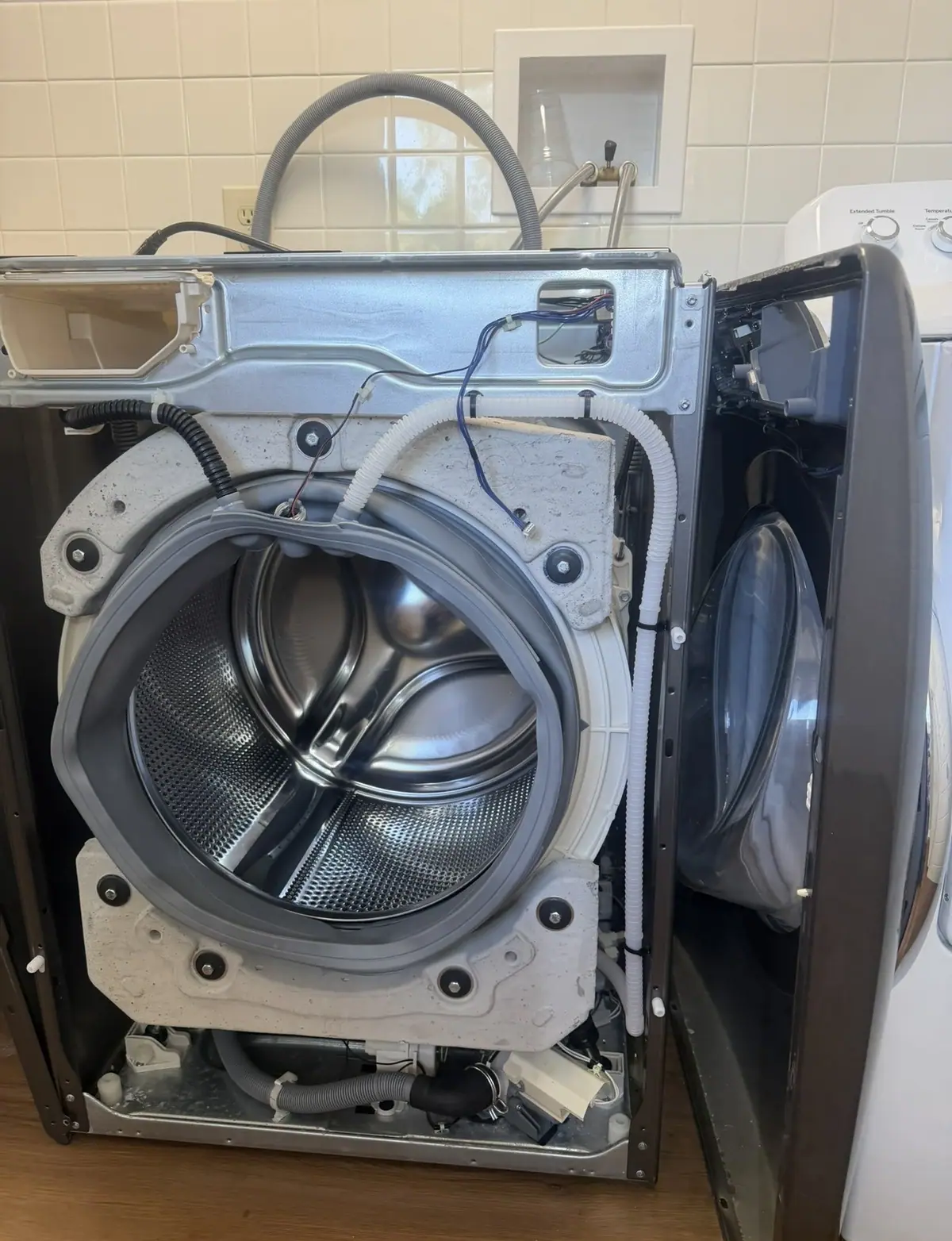
Washers are designed to control this movement. The drum does not simply sit rigidly inside the cabinet. It is supported by suspension components that allow controlled movement while preventing the rotating tub from slamming into the outer cabinet. Depending on the washer design, those components may include springs, dampers, shock absorbers, suspension rods, counterweights, and support structures.
That is why excessive shaking can come from two basic directions. Either the machine is being asked to handle an unusually unbalanced force, or the parts that are supposed to control that force are no longer doing their job correctly.
The installation also matters. A washer needs a solid foundation. If one foot is not touching the floor, the entire cabinet can rock. If the floor flexes, it can amplify normal vibration until the machine feels far more violent than it actually is.
Modern washers may try to correct imbalance automatically by slowing down, redistributing clothes, and attempting the spin again. If you hear the machine repeatedly accelerating, stopping, tumbling, and trying again, it may be struggling to balance the load.
The important point is that vibration itself is not the diagnosis. It is the result. Your job is to determine whether the force is coming from the laundry, the installation, the floor, or an internal mechanical condition.
An Unbalanced Load Is the Most Common Cause
If your washer suddenly starts shaking during one particular load but works normally most of the time, start with the laundry before investigating anything mechanical. An unbalanced load is probably the single most common explanation for dramatic washer vibration.
Clothes do not always distribute themselves evenly. Towels can twist together into a heavy bundle. Sheets can wrap around other items and trap water. Sweatshirts and jeans absorb large amounts of water and may gather on one side of the drum. Once the spin cycle begins, that uneven weight starts pulling the rotating drum in one direction over and over again.
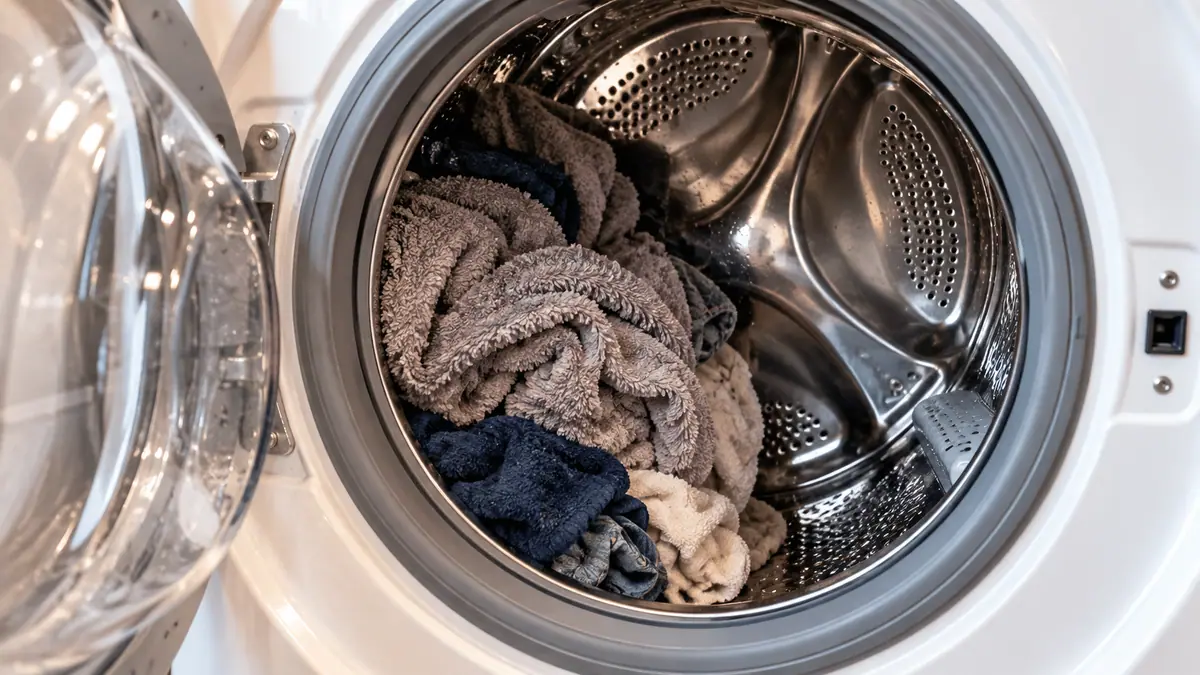
The faster the drum spins, the stronger the effect becomes. That is why a washer may look perfectly calm during the wash and rinse portions of the cycle but suddenly begin pounding as the final spin ramps up.
If this happens, stop or pause the washer according to its normal controls and wait for the drum to come to a complete stop. Open the machine when it is safe to do so and redistribute the clothes. Separate tangled items and spread heavier pieces around the drum.
If you are washing only two or three heavy items, you may need to add a few compatible pieces to help balance the weight. The idea is not simply to make the washer fuller. You are trying to create a more even distribution around the drum.
Pay attention to what happens after you rearrange the load. If the washer returns to normal, you have probably found the cause. There is no reason to start replacing suspension components because one load of towels became tangled.
Repeated imbalance, however, deserves more attention. If nearly every normal load ends up on one side, the problem may no longer be the laundry alone. Weak suspension components or a machine that is not level can make balancing harder.
Also avoid forcing the washer to continue a high-speed spin while it is violently banging. Repeated impacts can eventually damage components that were originally fine.
A simple rule helps here: if the machine shakes only occasionally with difficult loads, look at how the clothes are distributed. If it shakes with almost everything you wash, start investigating the washer itself.
The Washer May Not Be Sitting Level
A washing machine needs firm, even contact with the floor. If one corner is slightly higher than another, the cabinet can rock every time the drum changes direction. Once the spin cycle reaches high speed, that small amount of movement can turn into strong vibration.
You do not need expensive equipment to perform the first check. With the washer turned off, place your hands on opposite top corners and gently try to rock the cabinet diagonally. Then test the other pair of corners. A properly supported machine should feel stable. If it clicks, shifts, or rocks, one or more feet may not be contacting the floor correctly.
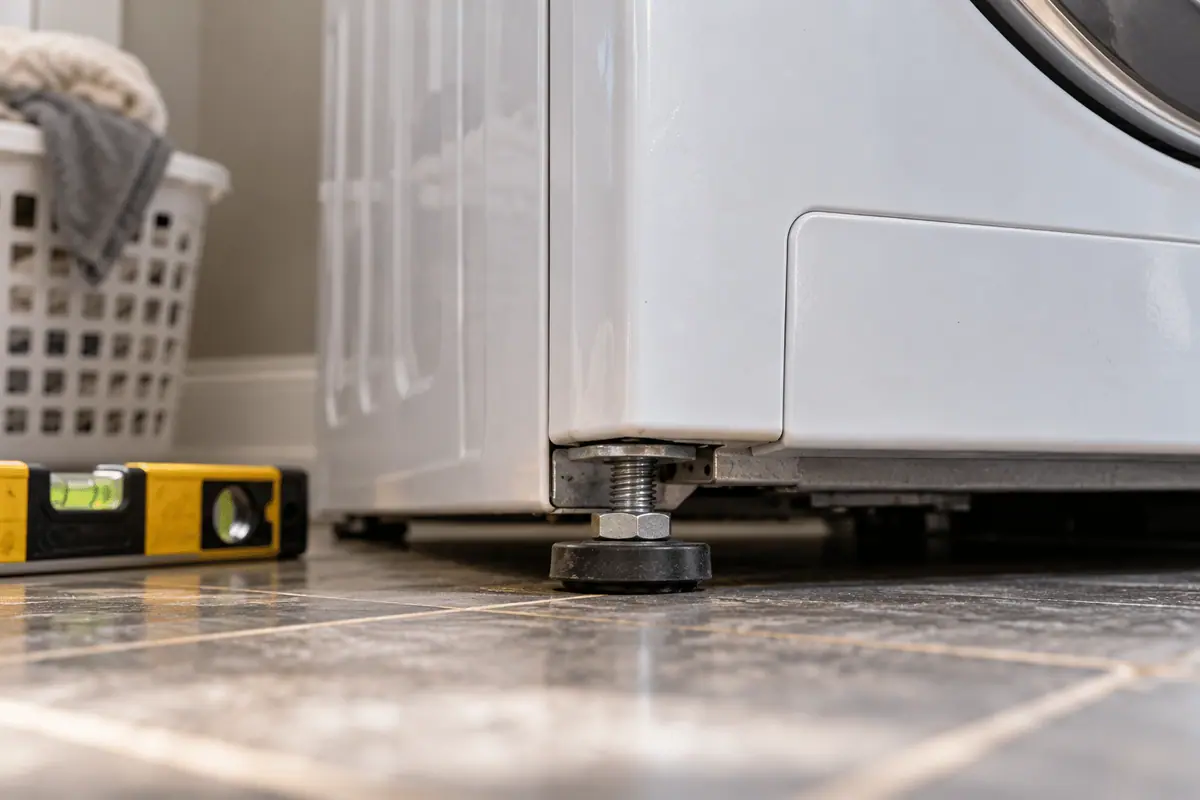
Most washers have adjustable leveling feet near the bottom corners. Over time, a foot may loosen because of vibration, or the machine may shift slightly during cleaning or flooring work. Even moving the washer a few inches can change how it sits if the floor is uneven.
Use a basic level across the top of the cabinet from side to side and front to back. The exact installation requirements can vary, but the machine should generally sit stable and properly aligned according to its design.
The important part is not only whether the top looks level. All four feet need to support the washer firmly. A machine can appear almost level while one foot barely touches the floor.
When adjusting the feet, disconnect power first if you need to reach underneath or place your hands near the base. Do not tilt a heavy washing machine farther than you can safely control. Water hoses and drain lines can also be damaged if the appliance is moved carelessly.
After adjusting the feet, make sure any locking nuts are tightened if the design includes them. Otherwise, normal vibration may allow the feet to rotate and lose their setting again.
Then test the washer with a normal balanced load. If the violent movement is gone, the repair may have been nothing more complicated than proper leveling.
This is one of those situations where a tiny adjustment can produce a huge difference. A washer spinning hundreds of times per minute needs a stable base, and one loose corner can make the whole appliance behave like it is trying to escape the laundry room.
The Floor Under the Washer May Be Part of the Problem
Sometimes the washing machine is perfectly level and mechanically healthy, yet the entire room seems to vibrate during spin. In that situation, look beneath the washer instead of inside it.
A washing machine can create significant dynamic force when a heavy wet load spins at high speed. A solid concrete floor handles that force very differently from a flexible wood floor. If the floor bends or bounces slightly, it can amplify the washer’s normal movement.
This is why some washers seem perfectly calm in one house and unusually shaky after being moved to another. The machine did not necessarily change. Its foundation did.
Stand near the washer while it enters the spin cycle and pay attention to the floor. Do you feel vibration several feet away? Do nearby doors, shelves, or objects shake along with the machine? Does the floor feel springy when you walk across it? Those clues suggest that structural movement may be contributing.
Older homes can be especially vulnerable because floor joists may span long distances, or the laundry area may sit near the middle of a flexible floor section. The washer’s spin speed can sometimes match the natural vibration frequency of the floor, making the movement look much worse than expected.
Before blaming the floor entirely, confirm that the machine itself is stable. A flexible floor combined with one poorly adjusted foot is a recipe for severe movement.
Also inspect the surface directly beneath the feet. Smooth tile, uneven flooring, damaged vinyl, or loose floor material can allow the feet to slide. A washer that stays level but slowly creeps forward may not have enough grip.
Rubber anti-vibration pads can sometimes reduce transmitted vibration and improve grip, but they are not a cure for a structurally weak floor or a defective washer. They work best when the machine is already properly leveled and mechanically sound.
If floor flex is severe, reinforcing the floor may be necessary. That can move beyond simple DIY appliance maintenance, particularly if structural framing needs attention.
A washing machine depends on the building around it more than most people realize. When diagnosing a washer that shakes even though it is level, do not forget that the floor itself is part of the suspension system in a practical sense.
Shipping Bolts May Still Be Installed
If a newly installed front-loading washer shakes violently from its very first cycle, one of the first things to check is whether the shipping bolts or transportation restraints were removed.
During transportation, the internal tub needs to be held in place. Without restraints, the heavy suspended drum assembly could move excessively inside the cabinet and suffer damage while the appliance is being shipped. Manufacturers therefore secure the tub using bolts, brackets, or other transportation hardware.
Those restraints are supposed to be removed during installation. If they remain attached, the suspension cannot move the way it was designed to move.
The result can be dramatic. Instead of the internal tub absorbing and controlling movement, vibration transfers directly into the washer cabinet. The machine may shake violently, bang, or move across the floor even with a relatively normal load.
If the washer is new, newly installed, recently moved from another home, or has behaved badly since the day it was connected, check the back of the machine for transportation hardware. The exact design varies, so use the installation information that came with the washer if it is available.
Do not simply remove random bolts from the back panel. Some bolts are structural fasteners and are meant to remain in place. Shipping hardware is usually identifiable through the installation instructions or markings around the mounting points.
Disconnect the washer from power before removing transportation hardware. Once the correct restraints are removed, store them somewhere safe. You may need them again if the machine is transported in the future.
Operating a washer repeatedly with shipping restraints installed can place unnecessary stress on the drum, bearings, cabinet, and suspension system. This is not something to ignore simply because the washer technically completes a cycle.
If the machine has been operating normally for years and suddenly starts shaking, shipping bolts obviously are not your problem. This cause mainly applies to newly installed or recently transported machines.
It is a perfect example of why installation history matters. A washer that shakes from day one needs a different troubleshooting approach from one that worked quietly for eight years and suddenly started banging last week.
Overloading the Washer Can Cause Violent Movement
There is a big difference between filling a washing machine efficiently and stuffing in as much laundry as physically possible. An overloaded washer may still start the cycle, but that does not mean the machine can properly wash, rinse, redistribute, and spin that amount of clothing.
Wet laundry becomes heavy. Very heavy. A basket that feels manageable when dry can gain a significant amount of weight once towels, jeans, sweatshirts, and other absorbent items become saturated.
The washer’s suspension is designed to handle a certain range of load weights and movement. When the drum is overloaded, the suspension has less room to control that mass. Clothes also have less room to redistribute themselves naturally.
That combination can produce hard banging during spin, repeated attempts to rebalance, slower spin speeds, or a washer that visibly rocks.
Overloading can create other problems too. Clothes may not clean properly because they cannot move through water and detergent effectively. Rinsing may be incomplete, and the washer may struggle to extract water from the load.
Do not judge capacity by whether you can physically close the door or lid. A drum packed tightly enough that clothes cannot move is usually too full.
Bulky items deserve extra attention. A large load of light shirts may weigh far less when wet than a smaller drum full of thick towels. Capacity is about more than volume.
If your washer begins shaking with a very heavy load, pause the cycle when safe, remove some items, redistribute what remains, and restart the appropriate portion of the cycle. If the machine becomes stable afterward, the load was likely the issue.
Repeated overloading can accelerate wear on bearings, suspension parts, motor components, and the drive system. Saving one extra laundry cycle today is not a good trade if the machine spends years being pushed beyond its intended operating conditions.
A practical approach is to give laundry enough space to move freely. When the drum has room to redistribute clothing, the washer has a much better chance of reaching high spin speed smoothly.
If your machine behaves normally with medium loads but becomes violent whenever you pack it full, the solution may be as simple as washing slightly smaller loads.
Washing One Heavy Item Can Throw the Drum Off Balance
Oddly enough, a washer can have trouble with both too much laundry and too little. One large, heavy item may be harder to balance than a reasonably full load.
Blankets, bathroom mats, thick hoodies, comforters, pillows, and similar items can absorb a huge amount of water. When one of these items sits on one side of the drum, there may be nothing on the opposite side to counterbalance its weight.
Imagine putting a wet ten-pound weight on one side of a spinning wheel. As speed increases, the wheel wants to pull strongly toward that side. Your washer’s suspension tries to absorb the force, but there is a limit to what it can control.
You may notice the machine beginning to spin, stopping, tumbling the item around, and trying again several times. That behavior can be normal because the washer is attempting to redistribute the load.
The problem comes when the item refuses to balance. A large bath mat, for example, may stick to the drum wall with most of its water concentrated in one area.
If the washer begins banging, stop the cycle according to the normal controls and wait for the drum to stop completely. Reposition the item. Depending on what you are washing, adding one or two compatible items can sometimes help distribute weight more evenly.
Do not add random delicate clothing simply to create balance. Match items by fabric weight and washing requirements.
Be careful with water-resistant or waterproof items. Some can trap large amounts of water and may behave unpredictably during spin. Always follow the care instructions for the item and the washer’s guidance on bulky or water-resistant materials.
If the washer handles normal mixed loads quietly but struggles only with one blanket or rug, the machine may be completely healthy.
This is why the question “What was in the washer when it started shaking?” matters so much. The load itself is part of the operating system.
A mechanically sound washing machine cannot completely overcome the physics of a badly distributed heavy object. Sometimes the best repair is not a repair at all. It is changing how you load bulky laundry.
Worn Shock Absorbers or Suspension Parts Can Cause Banging
If your washer shakes with ordinary, properly balanced loads and you have already confirmed that it is level and stable, the suspension system deserves closer attention.
The inner drum and tub are not mounted rigidly to the washer cabinet. They need some freedom to move because an absolutely rigid design would transfer enormous vibration to the rest of the machine. Suspension components allow that movement while keeping it controlled.
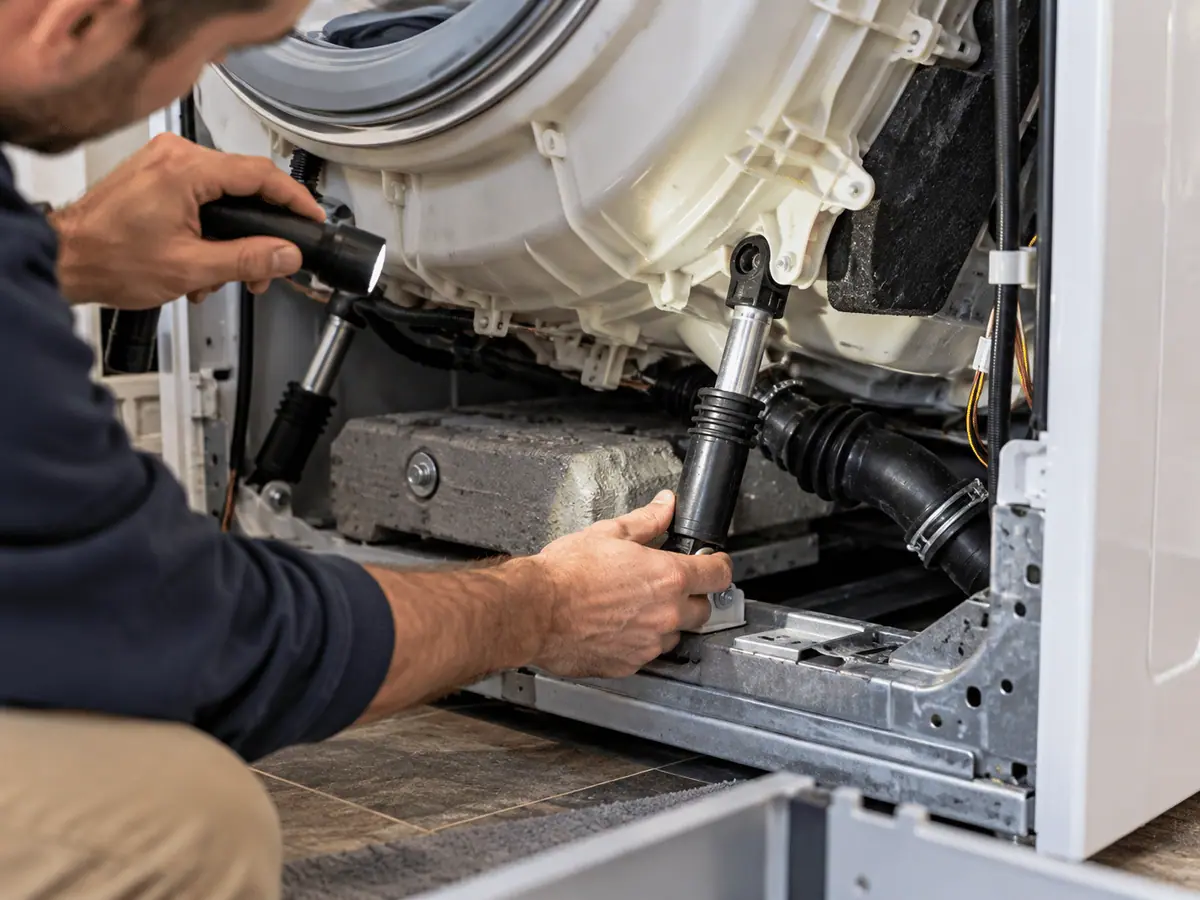
Depending on the washer design, the system may use shock absorbers, dampers, suspension rods, springs, counterweights, or a combination of these parts.
Over time, dampers can weaken, springs can stretch, plastic joints can wear, and mounting points can loosen. When that happens, the tub moves farther than it should.
One common symptom is a washer that seems relatively normal at low speed but begins banging hard as the drum accelerates. You may hear the internal tub striking the cabinet. The machine may also continue bouncing longer than expected after the spin speed changes.
With power disconnected, you may be able to perform a simple observation test. Depending on the washer type, gently press the drum or tub downward and release it. The movement should feel controlled rather than loose and excessively bouncy. Do not force anything or use this test if access requires reaching around sharp or electrical components.
Visible leaning can be another clue. If the drum appears to sit unusually low or off-center even when empty, a suspension component may be damaged.
Some suspension repairs are approachable for experienced DIY homeowners, but access can require removing large panels, supporting the tub, or working around heavy components. That is where professional washer repair may be the safer and more practical option.
Do not keep running a washer that is slamming the tub repeatedly into the cabinet. Every impact places additional stress on hoses, wiring, bearings, and mounts.
Also remember that suspension wear may develop gradually. You might first notice slightly more vibration, then occasional banging, and eventually major movement with nearly every load.
Once normal load balance, leveling, and floor support have been ruled out, worn suspension components become one of the more likely mechanical causes of excessive washer movement.
Drum Bearings Can Cause Noise, Vibration, and Movement
Worn drum bearings produce a different kind of warning than a simple unbalanced load. Instead of only a thump or occasional bang, you may hear a deep rumbling, roaring, grinding, or growling sound that becomes louder as the drum spins faster.
Bearings allow the drum to rotate smoothly while supporting significant weight. During every wash cycle, they deal with the mass of the drum, the laundry, and the water. Over years of use, bearings can wear. If seals fail and water reaches them, wear may accelerate dramatically.
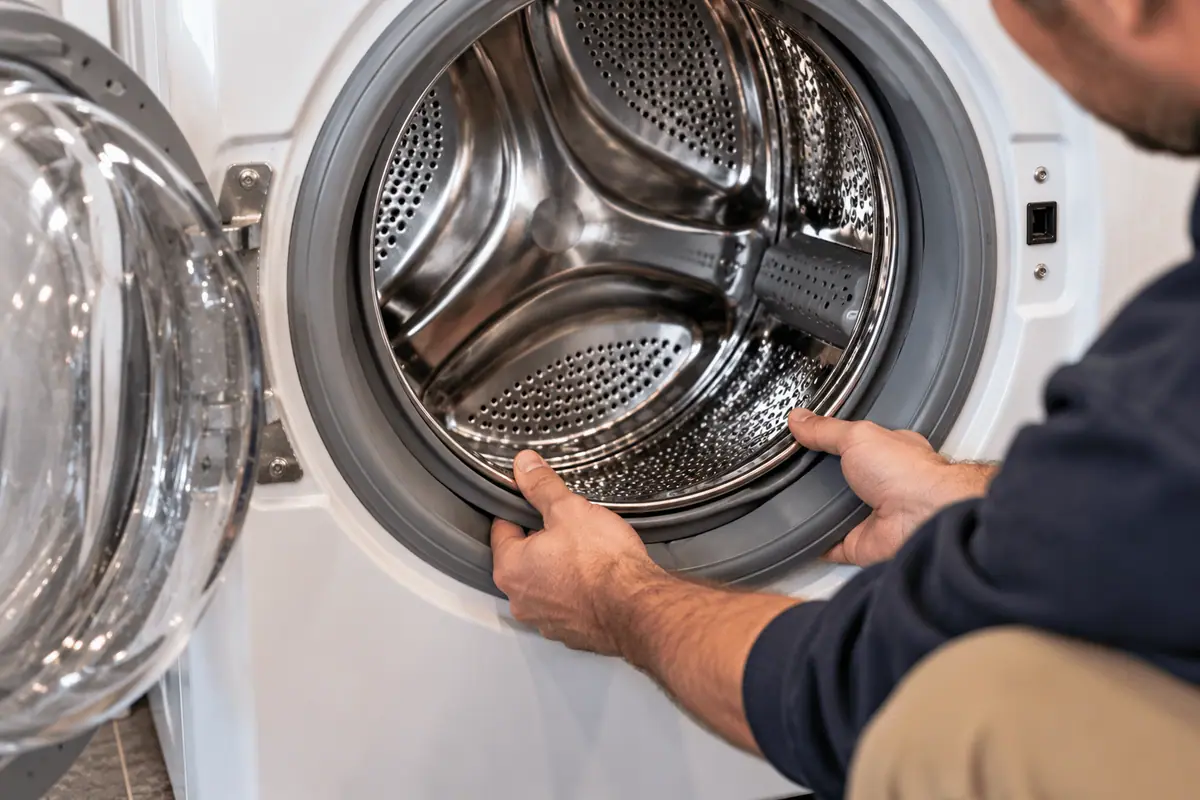
One useful DIY check is to rotate the empty drum by hand with the washer turned off. A healthy drum should generally rotate smoothly. Some resistance from the drive system is normal, but roughness, grinding, or a low growling sound can suggest bearing trouble.
You can also check for excessive drum play. With the machine off, carefully lift the inner drum near the opening. A very small amount of movement may be normal depending on the design, but obvious knocking or significant up-and-down movement can indicate wear in the bearing or support system.
Do not confuse bearing noise with a small object trapped near the drum. A coin, zipper pull, or other object can scrape and create metallic sounds. Bearing noise tends to be deeper and more consistent with rotation.
When bearings become severely worn, the drum may no longer rotate perfectly centered. That can create additional vibration and stress on the drive system.
Unfortunately, bearing repair is often much more involved than correcting an unbalanced load or adjusting a leveling foot. Depending on the washer design, replacing bearings may require major disassembly of the tub and drum assembly.
That does not mean you cannot diagnose the symptom yourself. Knowing that the machine produces a roaring noise even when empty helps separate the problem from ordinary laundry imbalance.
If you hear strong mechanical rumbling combined with vibration, do not continue assuming the floor is the cause.
A washer that shakes and sounds like a low-flying airplane during spin is giving you a very different clue from a machine that simply thumps because a towel got stuck on one side.
Loose Internal Parts Can Create Knocking or Banging Sounds
Not every banging sound comes from the drum itself. Washing machines contain heavy components that can loosen over time, and some of them are specifically designed to control vibration.
Many washers use counterweights to help stabilize the tub. These weights may be made from dense materials and mounted firmly to the tub assembly. If a mounting bolt loosens, the weight can shift slightly and produce a hard knocking sound as the machine moves.
A loose pulley, motor mount, panel, hose, or other internal component can create similar noises. The challenge is that vibration can make a small loose part sound much more dramatic than it really is.
Pay attention to the character of the noise. A dull, heavy knock that occurs in rhythm with tub movement may suggest something different from a light metallic rattle.
Start externally. Make sure the washer is not simply banging against the wall, dryer, cabinet, or water hoses. A drain hose tapping the wall can create a surprisingly loud sound that seems like it is coming from inside the machine.
Remove items sitting on top of the washer. Bottles, baskets, and metal objects can rattle loudly during spin and send you searching for a mechanical problem that does not exist.
If the noise definitely comes from inside, disconnect the washer from power before removing any service panel. Also shut off the water supply if moving or tilting the machine could stress the inlet hoses.
Look for obvious loose fasteners, damaged mounts, or signs that a component has been rubbing. Do not blindly tighten every bolt you can see. Some assemblies have specific torque requirements, and overtightening can damage plastic or cast components.
A component that repeatedly comes loose may have a damaged mount or worn thread rather than simply needing another turn.
If the washer makes a sudden new banging sound that appears even with an empty drum, take it seriously. The absence of laundry imbalance makes a loose mechanical component more likely.
The best troubleshooting approach is always the same: eliminate simple external causes first, then follow the sound toward the source without dismantling more of the washer than necessary.
Drainage Problems Can Make a Washer Shake During Spin
At first glance, drainage and vibration seem like separate issues. They are actually closely connected.
Before a washer can reach high spin speed, it needs to remove most of the water from the tub. If water remains because the drain path is restricted, the machine may try to spin a load that is much heavier than normal.
Imagine the difference between spinning damp towels and spinning towels sitting in several gallons of water. That extra weight changes everything.
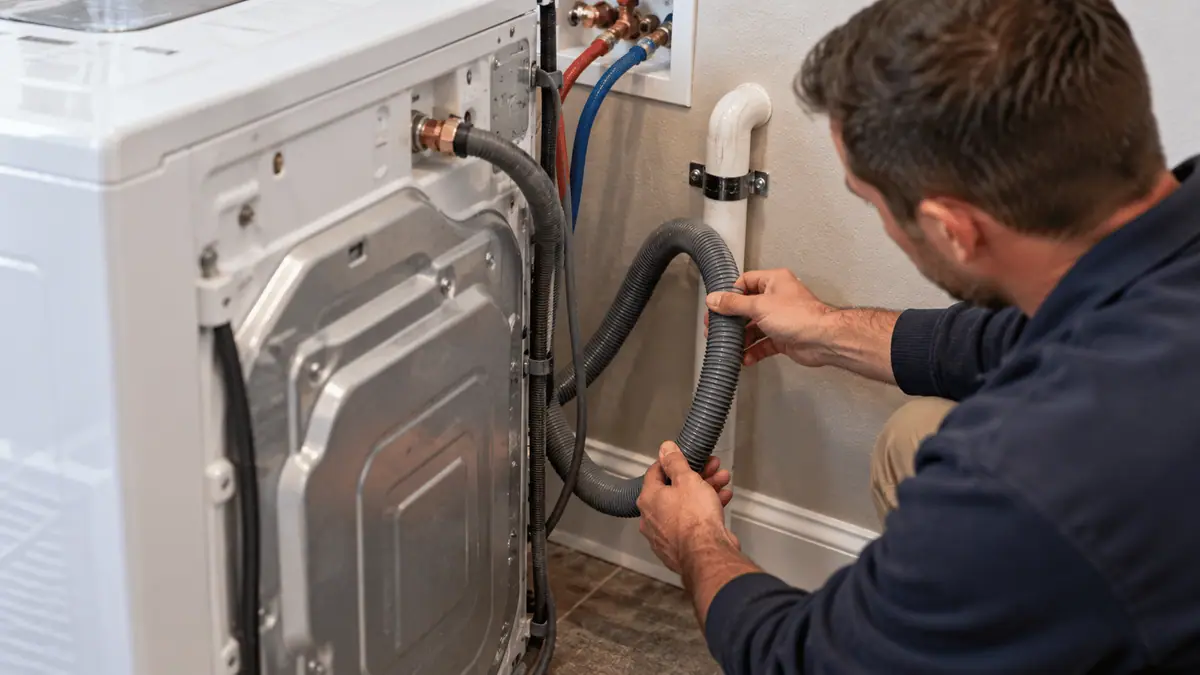
A clogged drain filter, restricted hose, failing pump, or partially blocked drain path can leave clothes unusually wet. The washer may repeatedly attempt to redistribute and spin the load but struggle to reach normal speed.
If your machine shakes and you also notice that clothes come out soaking wet, drainage should move higher on your troubleshooting list.
Listen during the drain portion of the cycle. Does the pump sound normal? Does water leave quickly, or does the washer spend an unusually long time trying to drain?
Inspect the drain hose for kinks or crushing, especially if the machine was recently moved. A hose trapped behind the washer can restrict water flow.
If your washer has an accessible drain filter intended for homeowner maintenance, unplug the machine before opening it and prepare for water to escape. A shallow container and towels are useful. Follow the washer’s normal maintenance procedure rather than removing random pump components.
Small objects such as coins, lint, hair, and fabric debris can restrict some drain systems.
Drain-hose installation also matters. A hose positioned incorrectly can interfere with normal drainage or create siphoning issues.
Do not automatically assume every spin-cycle vibration is a suspension problem. Ask whether the washer is successfully completing the step that comes immediately before high-speed spin.
A machine carrying extra water may behave unbalanced even when the clothes themselves are distributed reasonably well.
Once drainage is restored, the washer may spin normally again without any work on the suspension.
This is another reminder that washer troubleshooting is about looking at the whole cycle rather than just the moment when the noise becomes obvious. The cause of spin vibration may begin several minutes earlier during draining.
How to Troubleshoot a Shaking Washing Machine Yourself
The smartest way to troubleshoot a shaking washer is to start with the simplest causes and move toward the more complicated ones. That keeps you from replacing expensive parts when the real problem is a towel tangled around a sweatshirt or one leveling foot sitting a quarter inch above the floor.
Start with the load. If the washer is currently banging, stop or pause the cycle using the normal controls. Wait until the drum completely stops before opening the door or lid. Redistribute the clothing and separate any large tangled bundles.
Try the machine again. If the vibration disappears, monitor future loads before doing anything else.
Next, empty the washer and check cabinet stability. Press gently on opposite corners. If the machine rocks, inspect the leveling feet. Use a level and make adjustments so all feet contact the floor firmly.
Look around the washer. Make sure it is not touching the wall, dryer, cabinet, shelves, hoses, or plumbing. Sometimes the washer itself is only vibrating normally, but contact with another object creates a loud banging noise.
If the appliance is newly installed, verify that all transportation restraints intended for removal have actually been removed.
Then think about the floor. Watch for flexing and feel whether vibration travels across the room.
Run an empty or small balanced test cycle if appropriate. A washer that shakes violently even when empty is much more likely to have an installation, suspension, bearing, or mechanical problem than a load-balance issue.
Listen carefully. A thump is different from a roar. A metal scrape is different from a dull cabinet bang. The sound helps you narrow the problem.
Check drainage if clothes remain unusually wet. Inspect accessible hoses and homeowner-serviceable filters.
If you suspect an internal problem, unplug the washer before removing panels or reaching near internal components. Shut off water valves before moving the appliance far enough to stress hoses.
Look for broken suspension pieces, loose counterweight hardware, leaking shock absorbers where applicable, damaged springs, obvious drum play, or loose internal parts.
Do not bypass safety switches or run the machine with protective panels removed unless a proper service procedure specifically requires it and you have the training to do so safely.
Troubleshooting works best when you change one thing at a time. That way, when the washer becomes quiet again, you actually know why.
When You Should Stop Using a Washer That Is Moving or Banging
A little vibration does not mean you need to unplug the washer forever. Violent movement is different.
If the machine is jumping, striking nearby cabinets, pulling on water hoses, or moving several inches across the floor, stop the cycle. Continuing to operate it can create secondary damage that is far more expensive than the original problem.
Water hoses deserve particular attention. A washer that repeatedly walks forward can stretch the inlet hoses. If a connection loosens or a hose fails, you could end up with a significant water leak.
The drain hose can also pull out of position. A machine may then pump water onto the floor during the next drain cycle.
Electrical cords are another concern. A moving washer should never be allowed to pull against its power cord or wall outlet.
Stop using the machine if you hear loud grinding, repeated metal-on-metal impact, or a heavy internal component slamming inside the cabinet. Those sounds are not normal load noise.
Visible drum misalignment is another warning sign. If the drum appears to hang significantly lower on one side or rubs against the door opening, investigate before running another high-speed spin.
A burning smell, smoke, electrical arcing, or signs of overheated wiring mean the machine should be disconnected immediately if it is safe to do so.
Water leaking from underneath the washer while it shakes also changes the situation. The leak could come from a hose or internal connection that has been damaged by excessive movement.
If the only problem was one badly balanced blanket and the washer behaves normally after redistribution, there is no reason to treat it like a mechanical emergency.
The difference is repetition and severity. A machine that occasionally struggles with an awkward load is common. A machine that tries to walk across the laundry room with ordinary clothes has a problem that deserves correction.
Do not use your body to hold a violently moving washer in place during spin. The forces involved can be stronger than they appear.
When a washer’s movement becomes severe enough to threaten hoses, wiring, flooring, or surrounding structures, stopping operation is part of the repair process.
How to Prevent Excessive Washer Vibration
Once your washing machine is stable again, a few good habits can prevent many vibration problems from coming back.
Start with how you load the drum. Mix compatible items when possible so weight is distributed around the washer. Avoid combining one extremely heavy item with several lightweight pieces if the heavy item is likely to dominate the load.
Do not pack the drum tightly. Clothes need enough room to move and redistribute during the cycle.
Be especially careful with towels, bedding, rugs, and thick clothing. These items absorb large amounts of water and can create substantial imbalance.
Check the washer’s feet every few months, particularly if the appliance sits on a smooth or slightly flexible floor. Place your hands on the top corners and confirm that the cabinet does not rock.
If you move the washer for cleaning, check the level again afterward. Sliding it out and pushing it back can change the foot position or place one foot on a slightly different section of flooring.
Keep some clearance between the washer and nearby walls or appliances. Even normal vibration can sound terrible if the cabinet repeatedly taps against another hard surface.
Inspect water and drain hoses while you are behind the machine. Make sure excessive vibration has not created rubbing, kinks, or tension.
Pay attention to changes in sound. Washing machines rarely go from perfect condition to total failure without giving some warning. A small new knock, slightly stronger vibration, or occasional rough spin can be an early sign that something is loosening or wearing.
Do not ignore repeated load-balance errors either. If the machine suddenly struggles to balance ordinary loads that it handled easily in the past, the suspension may be changing.
Keep drainage systems maintained according to the washer’s normal homeowner service requirements. A partially clogged drain filter can create problems long before the washer completely stops draining.
Most importantly, do not treat violent shaking as a normal personality trait of the appliance. A properly installed, healthy washer should remain reasonably stable even during a fast spin.
Good loading habits, solid leveling, clear drainage, and early attention to new noises go a long way toward keeping the washer quiet. Preventing vibration is much easier than repairing damage caused by years of uncontrolled movement.
Conclusion
When a washing machine starts shaking, banging, or moving across the floor, the cause can range from extremely simple to genuinely mechanical. The trick is not to jump immediately to the worst-case scenario.
Start with the laundry. A tangled load, one heavy blanket, or an overloaded drum can make a perfectly healthy washer look like something is seriously wrong.
Then check the installation. Make sure the machine sits firmly on all four feet, confirm that it is level, and inspect the floor for flex or slippery surfaces. If the washer is new or was recently transported, make sure the proper shipping restraints have been removed.
Listen to the machine as well as watching it. Rhythmic thumping during a difficult load is different from deep bearing rumble, metallic scraping, or repeated internal impact. Those differences matter.
If normal loads consistently make the machine bounce, investigate the suspension system. Weak shock absorbers, worn suspension rods, stretched springs, or loose counterweights can allow excessive tub movement.
Do not forget drainage. A washer that cannot remove water effectively may enter the spin cycle carrying far more weight than it should.
Most of these first checks can be handled with your own hands. You can redistribute a load, check leveling, inspect hoses, examine the floor, confirm installation hardware, and listen for mechanical clues without tearing the washer apart.
The safety line is equally important. Unplug the washer before working around internal parts. Shut off the water supply before moving the machine enough to stress plumbing connections. Never put your hands near a moving drum or attempt to physically restrain a violently shaking washer.
If the machine is walking across the room, pulling on hoses, grinding loudly, leaking water, or repeatedly striking its cabinet, stop using it until the cause is identified.
A washing machine should move internally. That is how its suspension does its job. What it should not do is turn the entire laundry room into a vibration test.
Follow the symptoms in order, eliminate simple causes first, and you can often figure out exactly why your washing machine is shaking during the cycle without guessing or replacing parts unnecessarily.